AI-native materials · Sodium-ion anodes
Hard carbon, engineered by AI from coconut shell to anode.
Unifica Material is a vertically integrated, AI-native materials company. We own the chain from coconut shell supply in Vietnam to battery-grade hard carbon, and use machine learning to control every step. The result: sodium-ion cell makers get a credible second source that performs the same every batch.
Sodium-ion is ready to scale. Its anode supply is not.
2026 is the year sodium-ion moved from pilot lines to purchase orders. CATL alone signed a 60 GWh supply deal this spring. With demand projected at 400 to 500 GWh by 2030, hard carbon becomes a roughly $9B-a-year anode market. Cell makers are choosing suppliers now, and with qualification cycles of 12 to 18 months, whoever qualifies first becomes the default source. Yet qualified supply outside China is still thin.
Renewable feedstock
Coconut shell is a dense, low-ash agricultural by-product with a naturally favorable carbon structure. No new land, no petroleum pitch.
Process consistency
Natural feedstock varies. We control that variation from shell sourcing through carbonization, so cell makers qualify one material, not a moving target.
Supply-chain clarity
Built from the start for traceable, non-Chinese supply chains, so our customers can document where their anode material comes from.
AI platform
AI that runs the furnace, not just the spreadsheet.
Most AI-for-materials companies stop at prediction. We own the feedstock, the process and the data, so our models act on real production. This is a vertically integrated application of AI in the physical world.
01 · Sense
Characterize every input
Before it enters the process, each lot of shell is measured for ash, moisture, elemental composition and particle size.
02 · Predict
Model performance up front
Machine-learning models link feedstock and process parameters to capacity and first-cycle efficiency before a batch is fired.
03 · Control
Set the recipe per batch
Pretreatment and carbonization profiles are adjusted to each lot, absorbing natural variation instead of passing it to the cell.
04 · Learn
Every batch trains the next
Results from our own lines and our customers’ cell tests flow back into the models, so the platform compounds with every run.
Vietnam supply chain
AI is the engine. Our supply chain is the moat.
An engine is only as good as what feeds it. Ours runs on a trusted, physical position at the source: production rooted in Vietnam’s coconut belt, built on long-standing family relationships in the coconut industry. That position takes years to earn, and it cannot be bought or downloaded.
-
At the source
Shell collection and carbonization close to where coconuts are processed, for shorter logistics and tighter control of what goes into the furnace.
-
Relationships, not contracts
Access built over years with growers and processors gives us priority on quality shell. A new entrant cannot buy that overnight.
-
Traceable, outside the dominant chain
A Taiwan-owned feedstock supplier and documented chain of custody, so customers can show exactly where their anode material comes from.
-
The data only we can collect
Owning the physical chain is what feeds the AI: shell-to-cell data that a pure software company never sees.
Where we are
Building in stages, gate by gate.
Now
Feedstock screening
Lab-scale proof of concept on coconut shell precursors.
Next
Kilogram-scale validation
Scale-up runs and batch consistency data.
Then
Customer sampling
Samples to sodium-ion cell makers for qualification.
Later
Commercial supply
Production capacity sized to qualified demand.
Team
Materials science meets supply-chain operations.
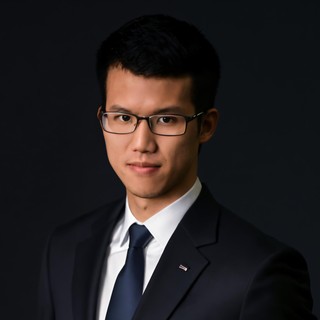
Jimmy Chiu
Co-founder, Technology
Materials scientist who has taken AI-developed materials from lab to market. At DuPont, built a machine-learning platform for materials development and used it to successfully commercialize new materials. Later co-founded Loop CO2, a university spin-out making CO2-derived polymers, as CTO. Chemistry PhD from Univ. of Minnesota.

Yao Chen
Co-founder, Supply Chain
15+ years in operations across coconut sourcing and processing. Has managed raw-material supply chains and built carbon sourcing networks across Asia, with a deep network in the sodium-ion (NIB) industry.
Chih-Kun Chiu
Angel Investor & Advisor
Serial entrepreneur with 30 years of building companies. Founded ten ventures across engineering, trading and technology, including an engineering firm that is still thriving today. Has spent over 25 years building business relationships in Vietnam, and the last decade growing a coconut oil business there.
Evaluating sodium-ion anode suppliers?
We’re speaking with cell makers and partners ahead of sampling. Tell us what you need.